%20scale(0.62)'%20d='M12%201.8C12.7%207.2%2016.8%2011.3%2022.2%2012%2016.8%2012.7%2012.7%2016.8%2012%2022.2%2011.3%2016.8%207.2%2012.7%201.8%2012%207.2%2011.3%2011.3%207.2%2012%201.8Z'/%3e%3c/svg%3e)
%20scale(0.62)'%20d='M12%201.8C12.7%207.2%2016.8%2011.3%2022.2%2012%2016.8%2012.7%2012.7%2016.8%2012%2022.2%2011.3%2016.8%207.2%2012.7%201.8%2012%207.2%2011.3%2011.3%207.2%2012%201.8Z'/%3e%3c/svg%3e)
Anti-Fraud Algorithm Engineer
互联网、AI·人工智能
Leverage machine learning and data analysis to detect and prevent fraud, safeguarding platform and user assets.
Daily work
- 01Clean and preprocess massive user behavior data, extract key features
- 02Design and train machine learning models (e.g., XGBoost, DNN) to identify fraud patterns
- 03Deploy models to production and monitor online performance, optimize accuracy
- 04Analyze fraud cases, iterate rules and strategies to counter new attacks
- 05Collaborate with risk, product, and operations teams to implement anti-fraud solutions
- 06Write technical docs and reports, explain model behavior to non-technical stakeholders
Ability requirements
Hard skills
- Machine learning / deep learning (XGBoost, LightGBM, CNN, RNN, etc.)
- Python/R programming, data processing (Pandas, NumPy)
- SQL and big data tools (Hive, Spark)
- Statistics and probability theory
- Model evaluation and tuning (AUC, KS, Recall, etc.)
Soft skills
- Logical analysis and problem-solving
- Strong data sensitivity and insight
- Team collaboration and cross-department communication
- Stress tolerance and rapid learning ability
Best suited for
Ideal for those who are logically rigorous, data-sensitive, enjoy solving complex problems and pursuing precision.
Less suited for
Not suitable for those who dislike repetitive data analysis, lack attention to detail, or prefer free-form creative work.
Salary (monthly)
Pre-tax estimate, tier-1 cities with social insurance · reference only
Profile
MBTI Fit
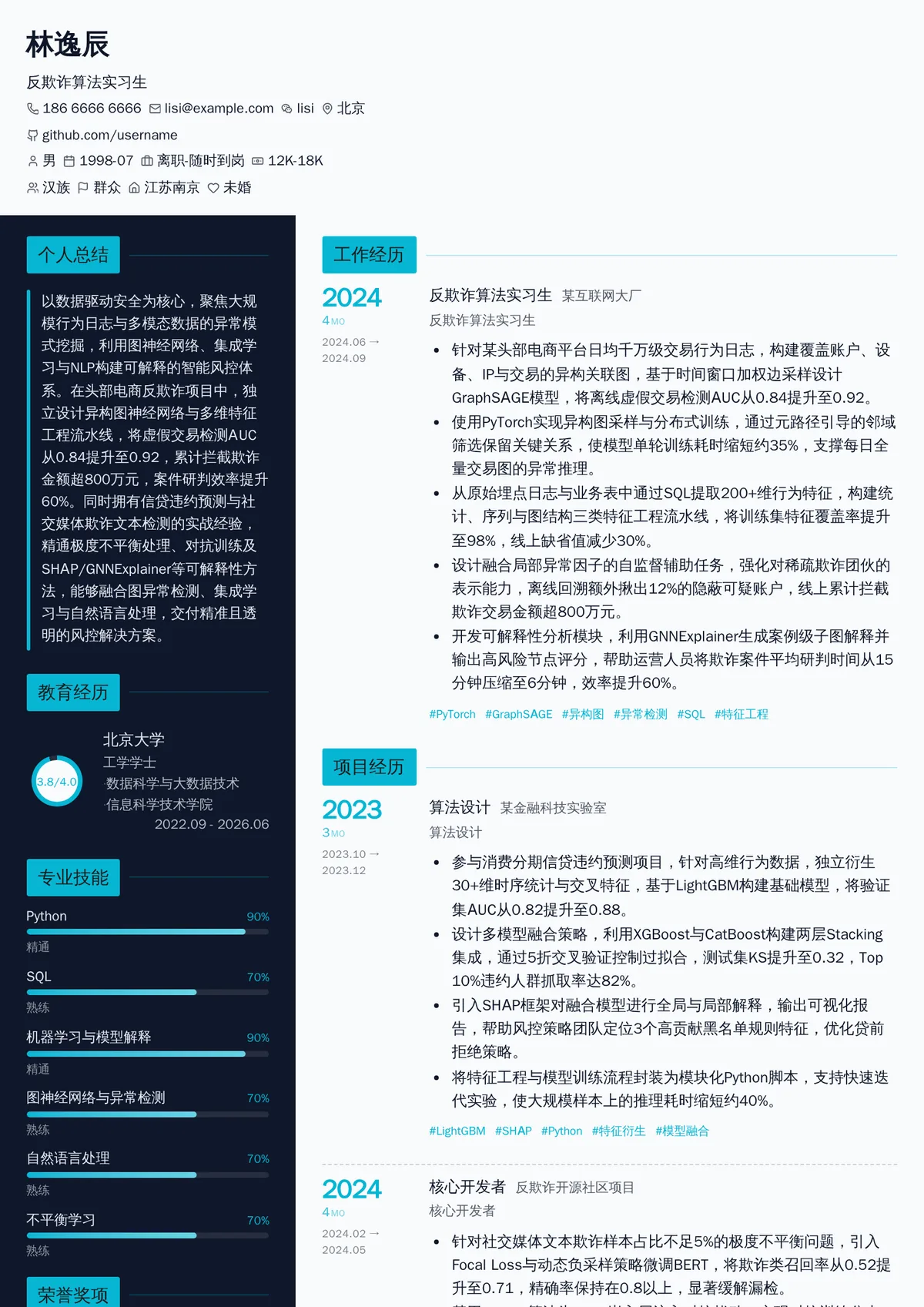
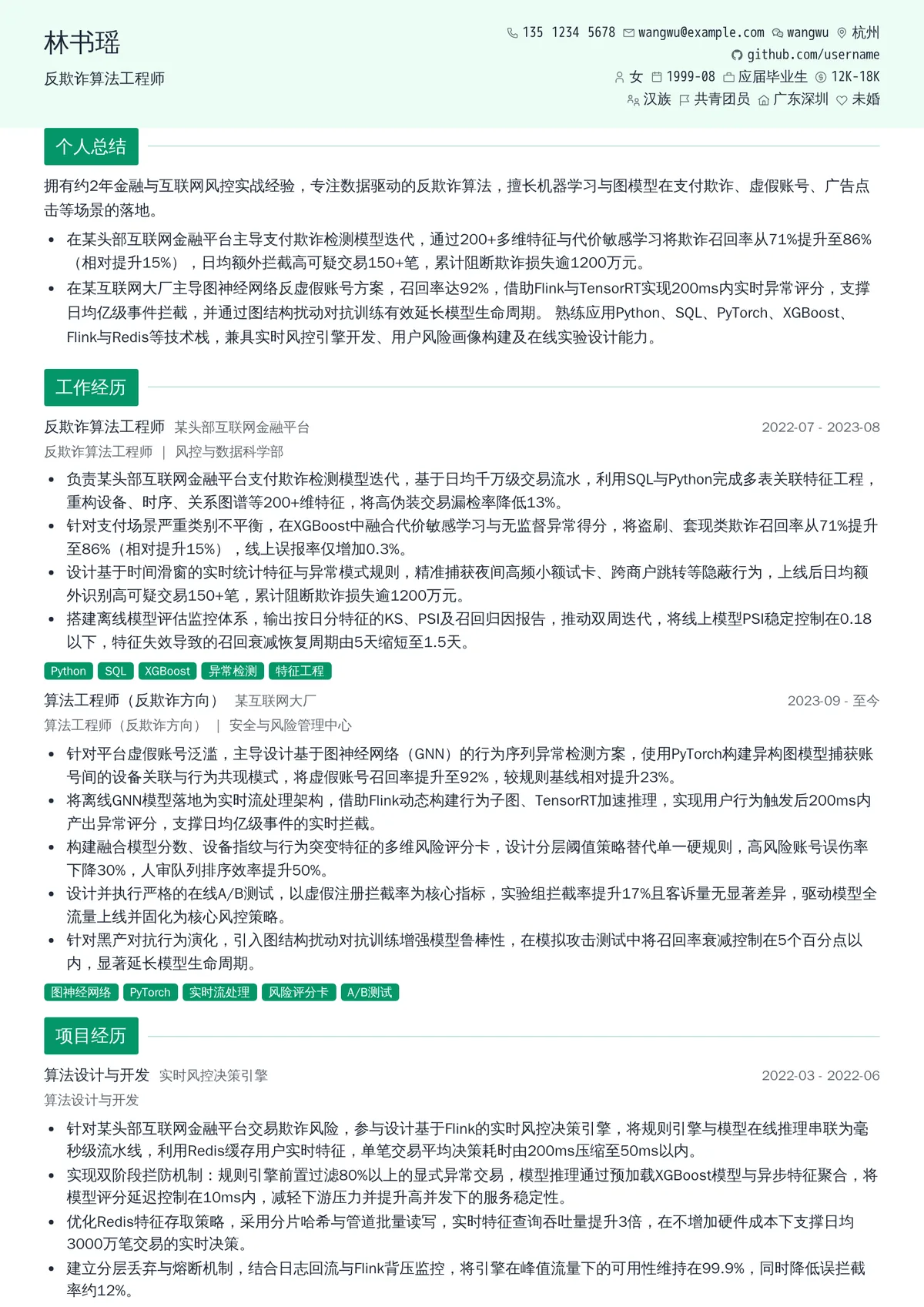
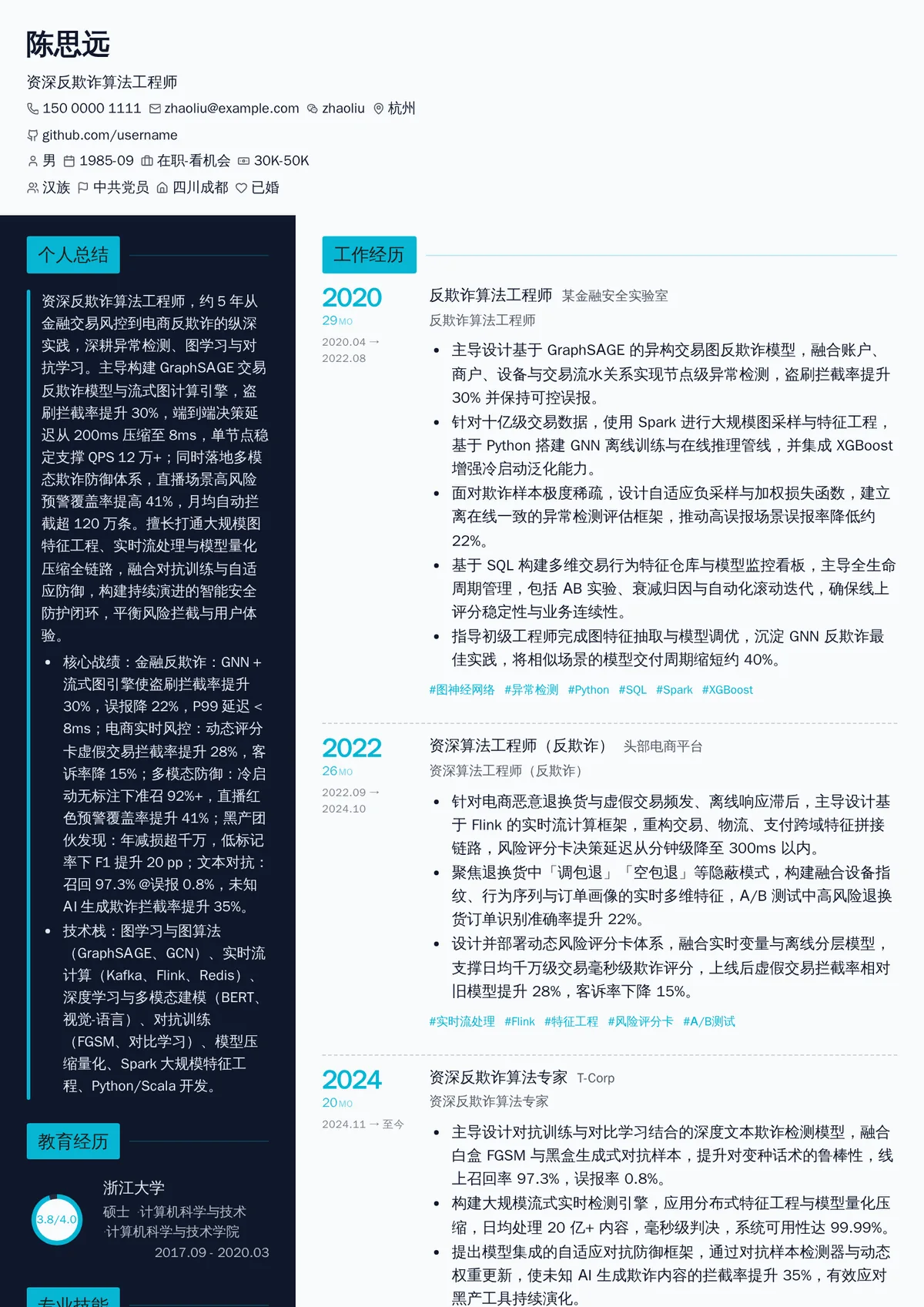
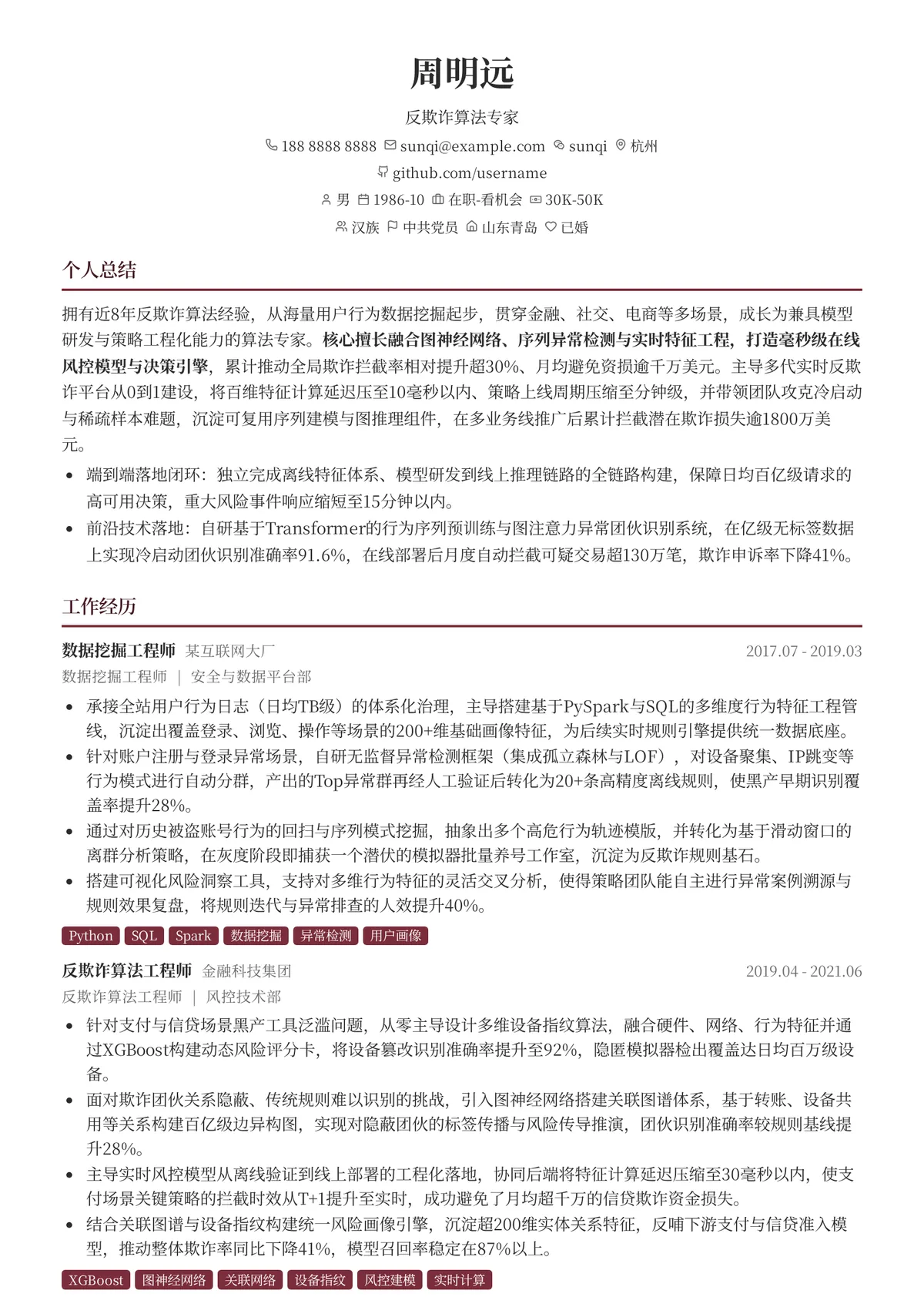
Resume examples for this role
Disclaimer: Salary figures on this page are estimated pre-tax monthly pay for positions with social-insurance contributions in China's tier-1 cities; other cities are converted using regional coefficients. Dimension scores and MBTI fit are editorial estimates, provided for reference only, and do not constitute any promise or advice.