%20scale(0.62)'%20d='M12%201.8C12.7%207.2%2016.8%2011.3%2022.2%2012%2016.8%2012.7%2012.7%2016.8%2012%2022.2%2011.3%2016.8%207.2%2012.7%201.8%2012%207.2%2011.3%2011.3%207.2%2012%201.8Z'/%3e%3c/svg%3e)
%20scale(0.62)'%20d='M12%201.8C12.7%207.2%2016.8%2011.3%2022.2%2012%2016.8%2012.7%2012.7%2016.8%2012%2022.2%2011.3%2016.8%207.2%2012.7%201.8%2012%207.2%2011.3%2011.3%207.2%2012%201.8Z'/%3e%3c/svg%3e)
Automation Design Engineer
电子、通信·硬件开发
Design automation systems for electronic/communication products, including hardware selection, circuit design, programming, and debugging to ensure stable and efficient operation.
Daily work
- 01Conduct functional design and scheme review for automation systems based on project requirements
- 02Design circuit schematics and select sensors, controllers, and other hardware
- 03Write PLC or embedded control programs, perform simulation and debugging
- 04Commission automation equipment on-site, troubleshoot operational issues
- 05Optimize system performance to improve production line efficiency and reliability
- 06Prepare technical documentation and operation manuals
Ability requirements
Hard skills
- Circuit design and simulation (Altium Designer, Multisim, etc.)
- PLC programming (Siemens, Mitsubishi, etc.)
- Embedded system development (C/C++, Python)
- Communication protocols (Modbus, CAN, EtherCAT, etc.)
- Sensor and actuator selection and integration
Soft skills
- Systematic thinking and problem-solving
- Cross-department communication and collaboration
- Ability to quickly learn new technologies
- Stress resistance and time management
Best suited for
Ideal for those who enjoy hands-on building, delving into technical details, and have a strong interest in automation systems.
Less suited for
Not suitable for those who dislike repetitive debugging or on-site hardware troubleshooting.
Salary (monthly)
Pre-tax estimate, tier-1 cities with social insurance · reference only
Profile
MBTI Fit
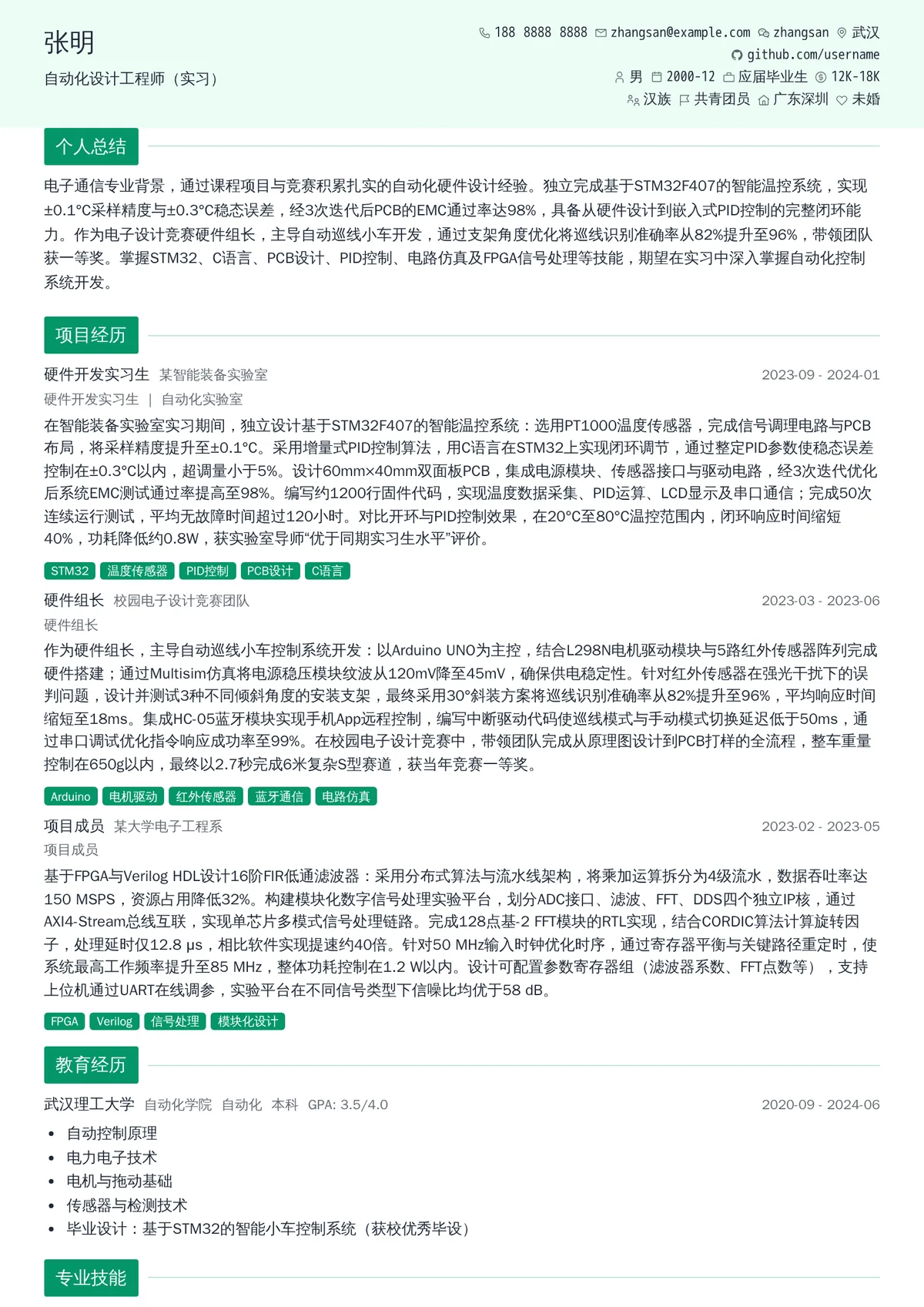
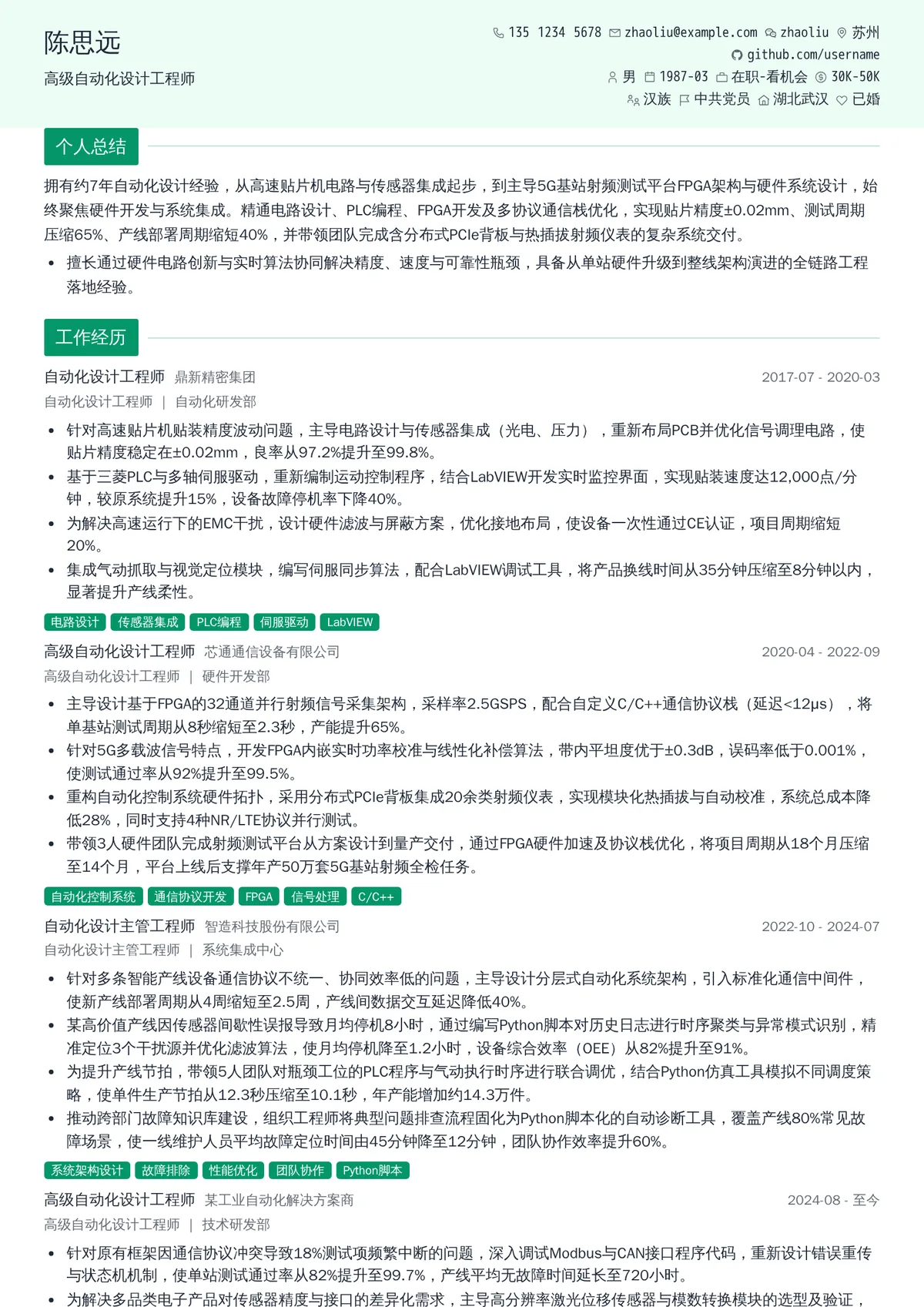
Resume examples for this role


Disclaimer: Salary figures on this page are estimated pre-tax monthly pay for positions with social-insurance contributions in China's tier-1 cities; other cities are converted using regional coefficients. Dimension scores and MBTI fit are editorial estimates, provided for reference only, and do not constitute any promise or advice.