%20scale(0.62)'%20d='M12%201.8C12.7%207.2%2016.8%2011.3%2022.2%2012%2016.8%2012.7%2012.7%2016.8%2012%2022.2%2011.3%2016.8%207.2%2012.7%201.8%2012%207.2%2011.3%2011.3%207.2%2012%201.8Z'/%3e%3c/svg%3e)
%20scale(0.62)'%20d='M12%201.8C12.7%207.2%2016.8%2011.3%2022.2%2012%2016.8%2012.7%2012.7%2016.8%2012%2022.2%2011.3%2016.8%207.2%2012.7%201.8%2012%207.2%2011.3%2011.3%207.2%2012%201.8Z'/%3e%3c/svg%3e)
Biomedical Engineering
医疗健康·医疗科技
Apply engineering principles to medicine, design medical devices, develop medical imaging software, and participate in clinical trials and regulatory processes
Daily work
- 01Design and test medical device prototypes, such as monitors and ultrasound probes
- 02Develop medical image processing algorithms for CT/MRI analysis
- 03Communicate with clinicians to define technical specifications
- 04Prepare technical documents and regulatory submissions for device certification
- 05Troubleshoot field issues and provide technical support
- 06Attend cross-functional project meetings to coordinate R&D and production timelines
Ability requirements
Hard skills
- Biomedical engineering fundamentals (physiological systems, biomechanics)
- Programming skills (Python, C++, MATLAB)
- Signal processing and image processing
- Medical device regulations and quality management systems (ISO 13485, FDA)
- Laboratory testing and data analysis
Soft skills
- Interdisciplinary communication (collaborating with physicians, engineers, regulators)
- Systematic thinking and problem-solving
- Teamwork and project coordination
- Innovation mindset and continuous learning
- Attention to detail and patience
Best suited for
Ideal for those with dual interest in medicine and engineering, enjoy hands-on problem solving, and can dedicate to research and development
Less suited for
Not suitable for those who dislike lab or hospital settings, lack patience for technical details and repetitive verification
Salary (monthly)
Pre-tax estimate, tier-1 cities with social insurance · reference only
Profile
MBTI Fit
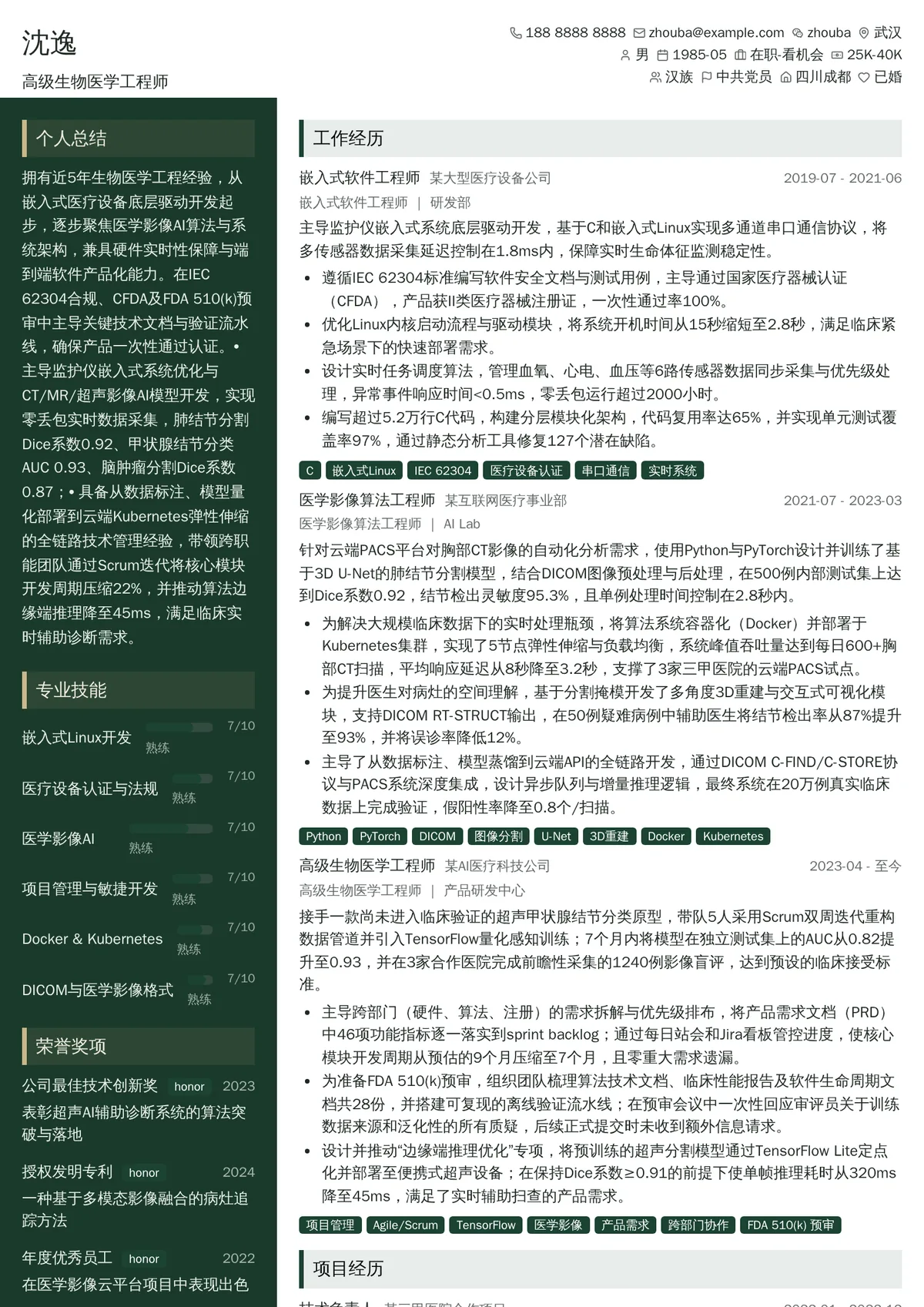
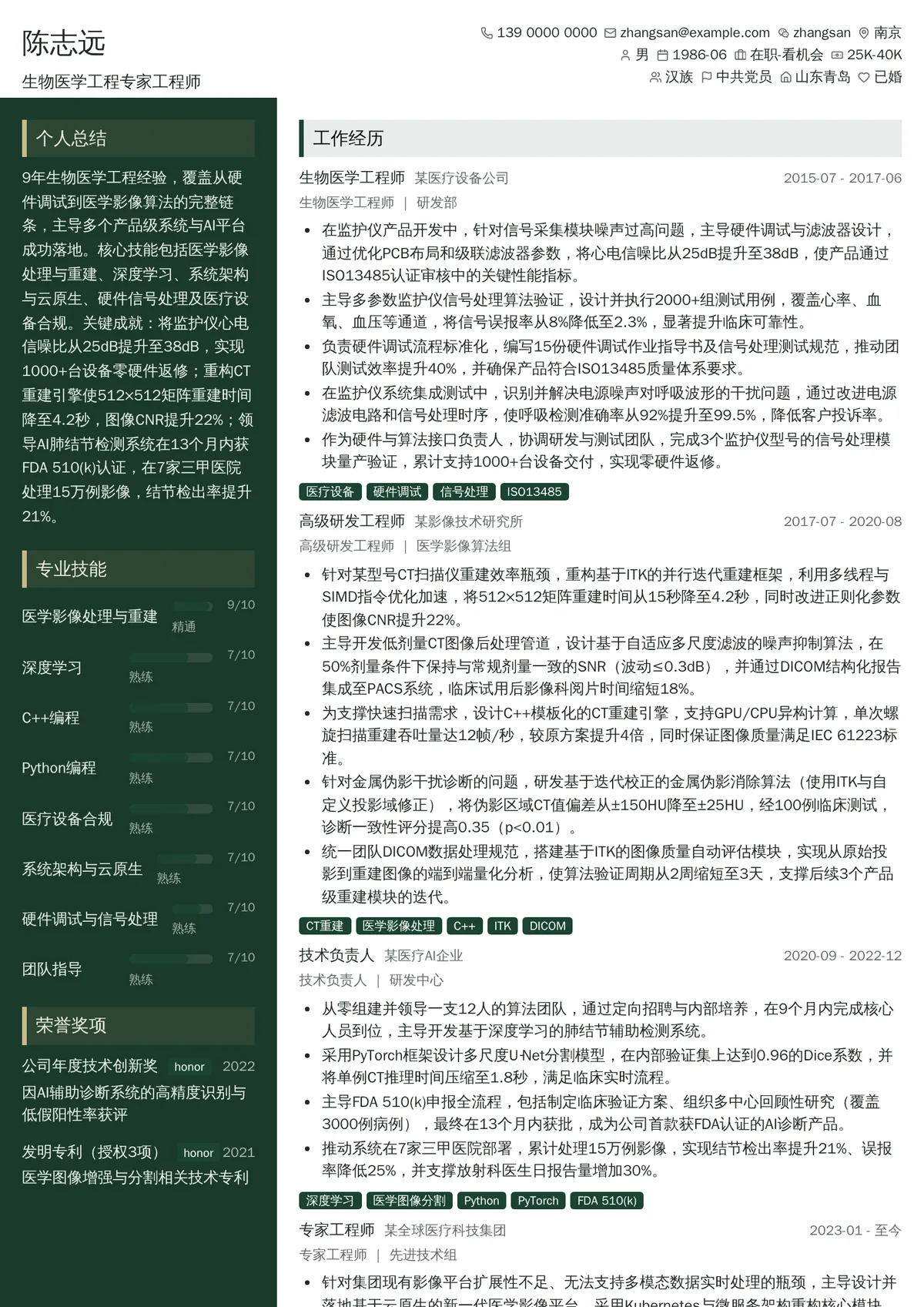
Resume examples for this role


Disclaimer: Salary figures on this page are estimated pre-tax monthly pay for positions with social-insurance contributions in China's tier-1 cities; other cities are converted using regional coefficients. Dimension scores and MBTI fit are editorial estimates, provided for reference only, and do not constitute any promise or advice.