%20scale(0.62)'%20d='M12%201.8C12.7%207.2%2016.8%2011.3%2022.2%2012%2016.8%2012.7%2012.7%2016.8%2012%2022.2%2011.3%2016.8%207.2%2012.7%201.8%2012%207.2%2011.3%2011.3%207.2%2012%201.8Z'/%3e%3c/svg%3e)
%20scale(0.62)'%20d='M12%201.8C12.7%207.2%2016.8%2011.3%2022.2%2012%2016.8%2012.7%2012.7%2016.8%2012%2022.2%2011.3%2016.8%207.2%2012.7%201.8%2012%207.2%2011.3%2011.3%207.2%2012%201.8Z'/%3e%3c/svg%3e)
Hardware Project Manager
电子、通信·技术项目管理
The hardware project manager oversees the entire lifecycle of a hardware product from concept to mass production, coordinating R&D, testing, and supply chain to ensure on-time, quality, and budget delivery.
Daily work
- 01Develop and update hardware project plans, allocate resources, and track progress.
- 02Organize cross-functional meetings to coordinate and resolve technical and management issues.
- 03Monitor project budget, control costs, and review change requests.
- 04Communicate with customers to manage expectations and deliver milestone results.
- 05Identify project risks, develop mitigation plans, and report regularly to management.
Ability requirements
Hard skills
- Project management tools (JIRA/MS Project)
- Hardware development process (IPD/Agile)
- Cost and budget management
- Risk assessment and control
- Technical specification understanding (schematics/mechanical)
Soft skills
- Communication and coordination
- Leadership and team motivation
- Problem-solving skills
- Stress resistance and time management
- Business acumen and customer orientation
Best suited for
Suitable for those with a technical background, who enjoy coordination and communication, have strong stress tolerance, and like to drive project progress.
Less suited for
Not suitable for those who dislike details, have poor communication, dislike structured processes, or cannot handle high work pressure.
Salary (monthly)
Pre-tax estimate, tier-1 cities with social insurance · reference only
Profile
MBTI Fit
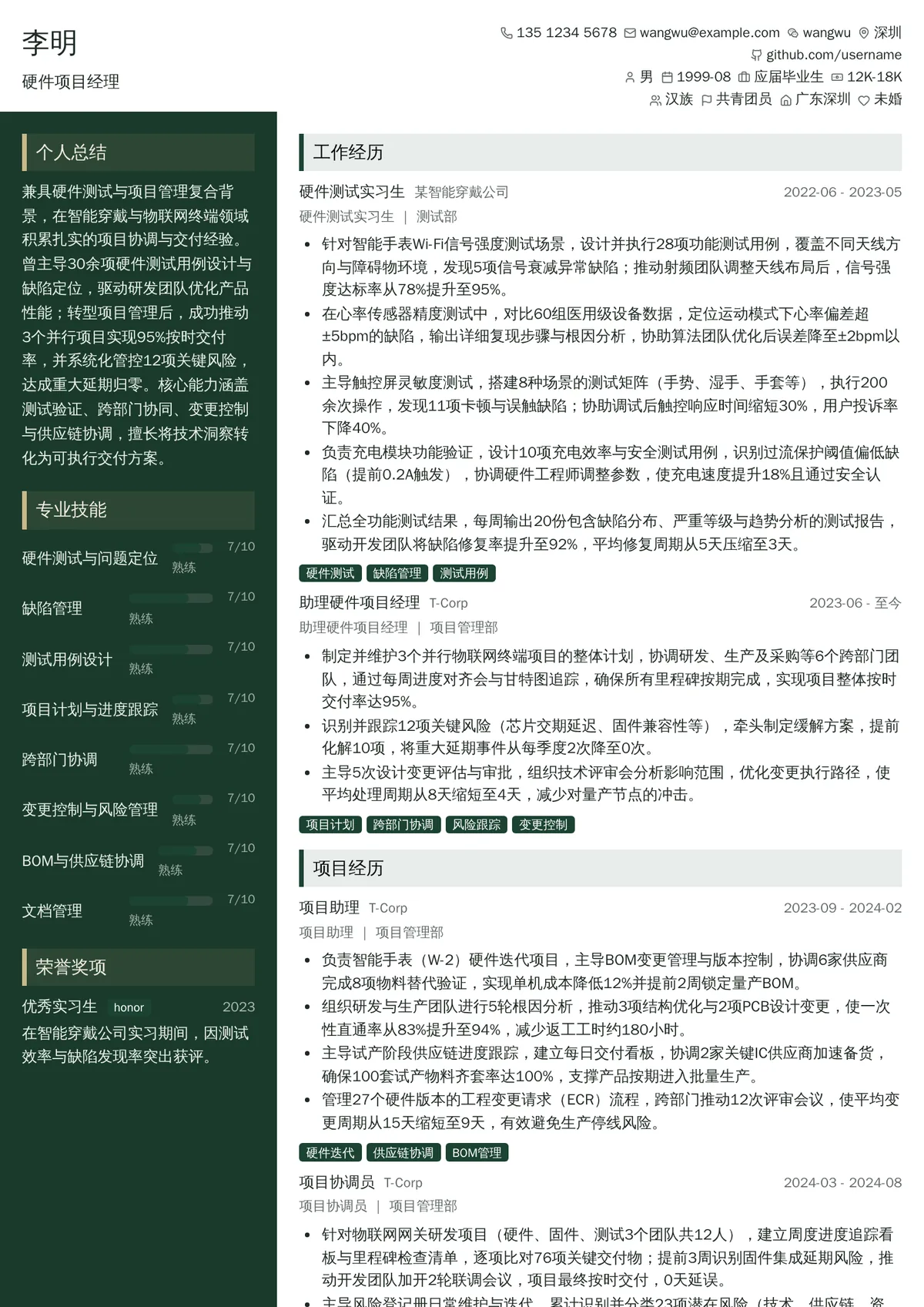
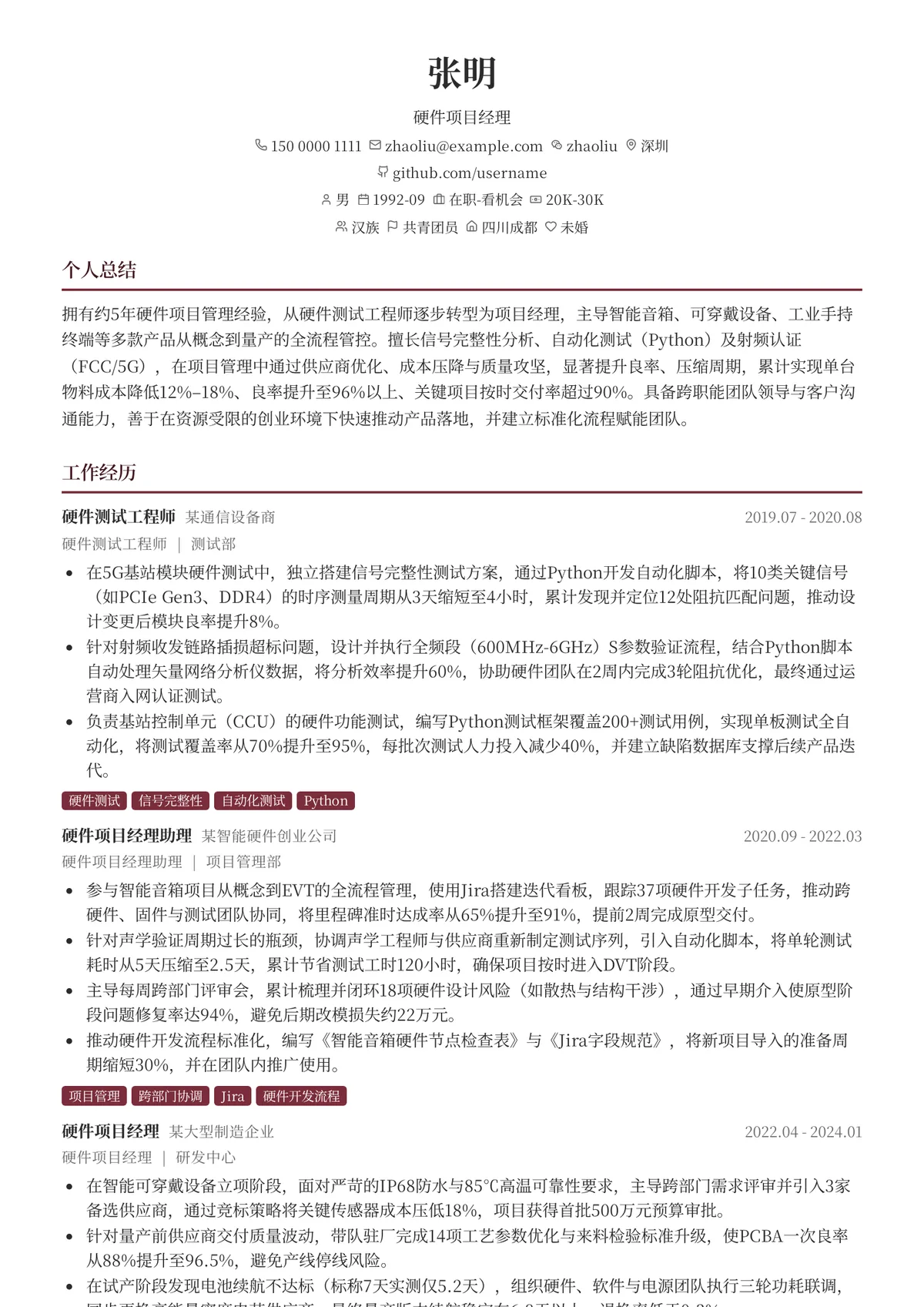
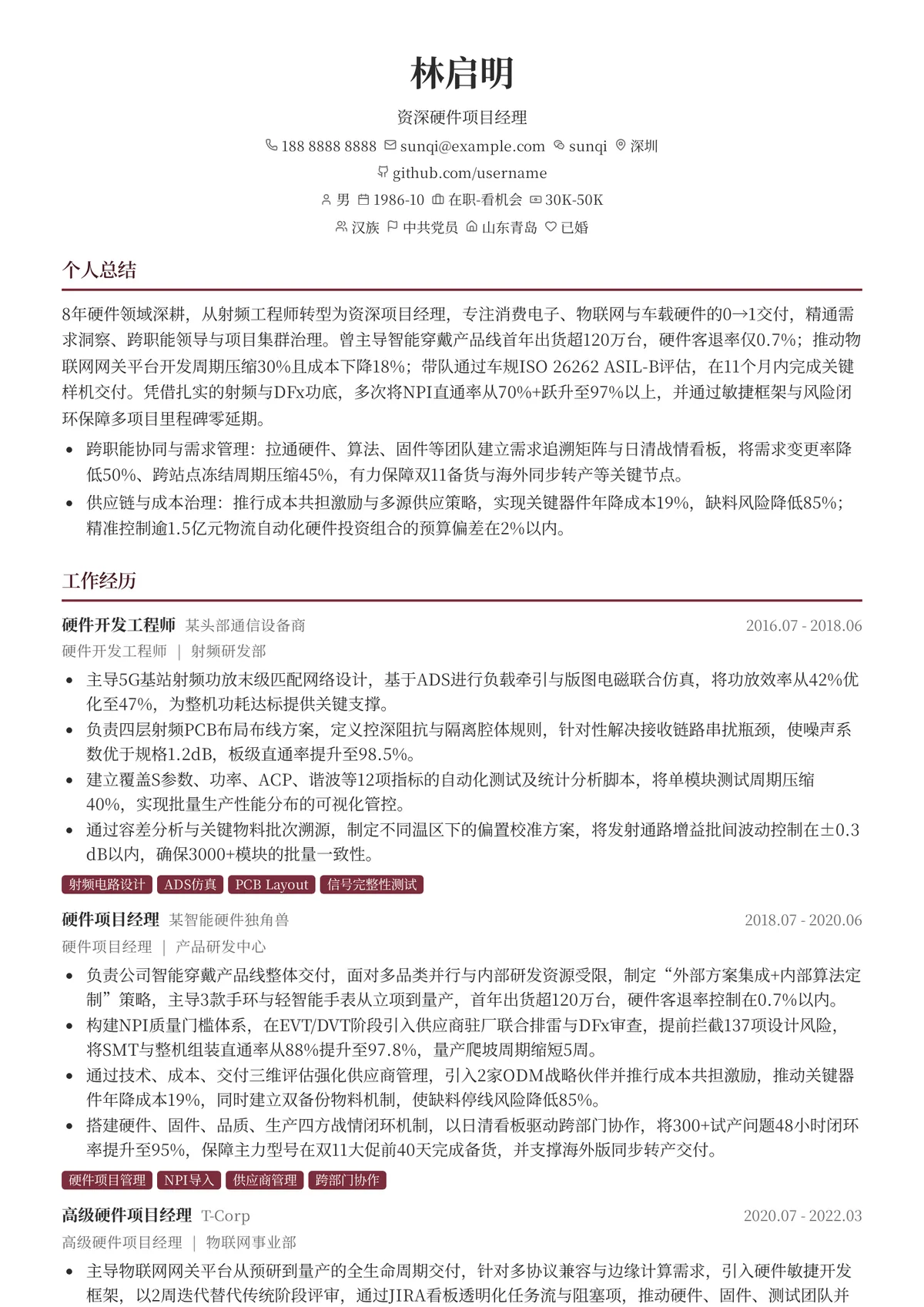
Resume examples for this role
Disclaimer: Salary figures on this page are estimated pre-tax monthly pay for positions with social-insurance contributions in China's tier-1 cities; other cities are converted using regional coefficients. Dimension scores and MBTI fit are editorial estimates, provided for reference only, and do not constitute any promise or advice.