%20scale(0.62)'%20d='M12%201.8C12.7%207.2%2016.8%2011.3%2022.2%2012%2016.8%2012.7%2012.7%2016.8%2012%2022.2%2011.3%2016.8%207.2%2012.7%201.8%2012%207.2%2011.3%2011.3%207.2%2012%201.8Z'/%3e%3c/svg%3e)
%20scale(0.62)'%20d='M12%201.8C12.7%207.2%2016.8%2011.3%2022.2%2012%2016.8%2012.7%2012.7%2016.8%2012%2022.2%2011.3%2016.8%207.2%2012.7%201.8%2012%207.2%2011.3%2011.3%207.2%2012%201.8Z'/%3e%3c/svg%3e)
3D Scene Modeling and Simulation Engineer
互联网、AI·人工智能
3D scene modeling and simulation engineers create realistic virtual environments for AI applications (e.g., autonomous driving, digital twins, metaverse) using modeling software and simulation engines, while optimizing rendering and physical interactions.
Daily work
- 01Build high-precision 3D models and textures using tools like Blender, Maya.
- 02Set up scenes and write interaction logic in Unity or Unreal Engine.
- 03Develop or integrate physics simulation algorithms (e.g., collision detection, fluid simulation).
- 04Collaborate with AI teams to generate synthetic data for algorithm training and validation.
- 05Optimize scene rendering performance to balance quality and real-time requirements.
- 06Write technical documentation, solidify modeling standards and toolchains.
Ability requirements
Hard skills
- Proficiency in Blender/3ds Max/Maya modeling software
- Mastery of Unity/Unreal Engine scene building and blueprint scripting
- Familiarity with C++/Python scripting
- Understanding of computer graphics (rendering pipeline, shaders)
- Knowledge of physics simulation (rigid body, cloth, particle systems)
- Basic skills in lightweight Web3D technologies (Three.js/WebGL)
Soft skills
- Creativity and aesthetic sense
- Logical thinking and problem decomposition
- Detail orientation and patience
- Team collaboration and communication
- Ability to quickly learn new technologies
Best suited for
Ideal for those who love combining math, graphics, and programming, enjoy creating virtual worlds and pursuing ultimate visual experiences.
Less suited for
Not suitable for those who dislike abstract thinking, lack patience for details, or cannot adapt to rapid iteration and overtime.
Salary (monthly)
Pre-tax estimate, tier-1 cities with social insurance · reference only
Profile
MBTI Fit
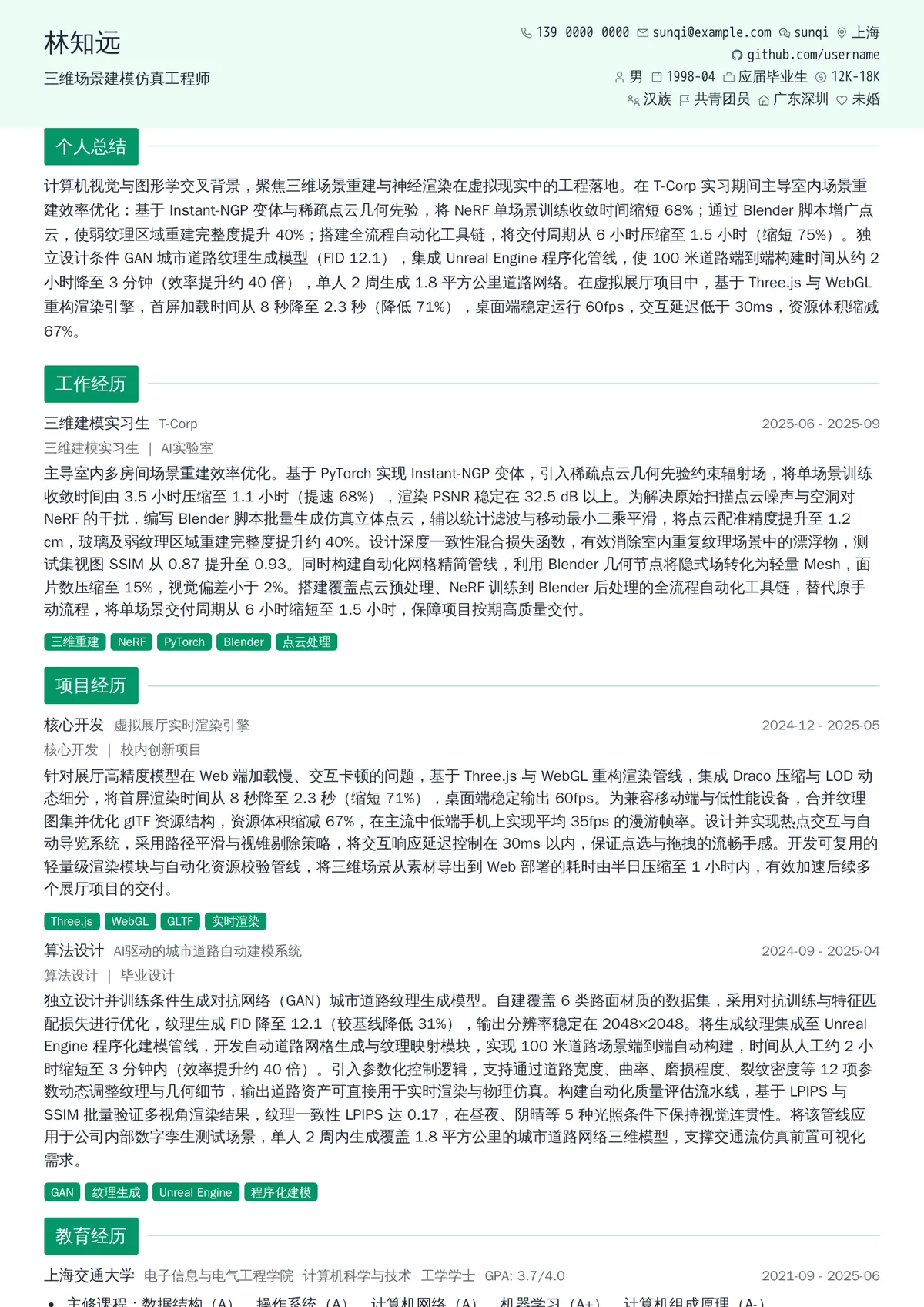
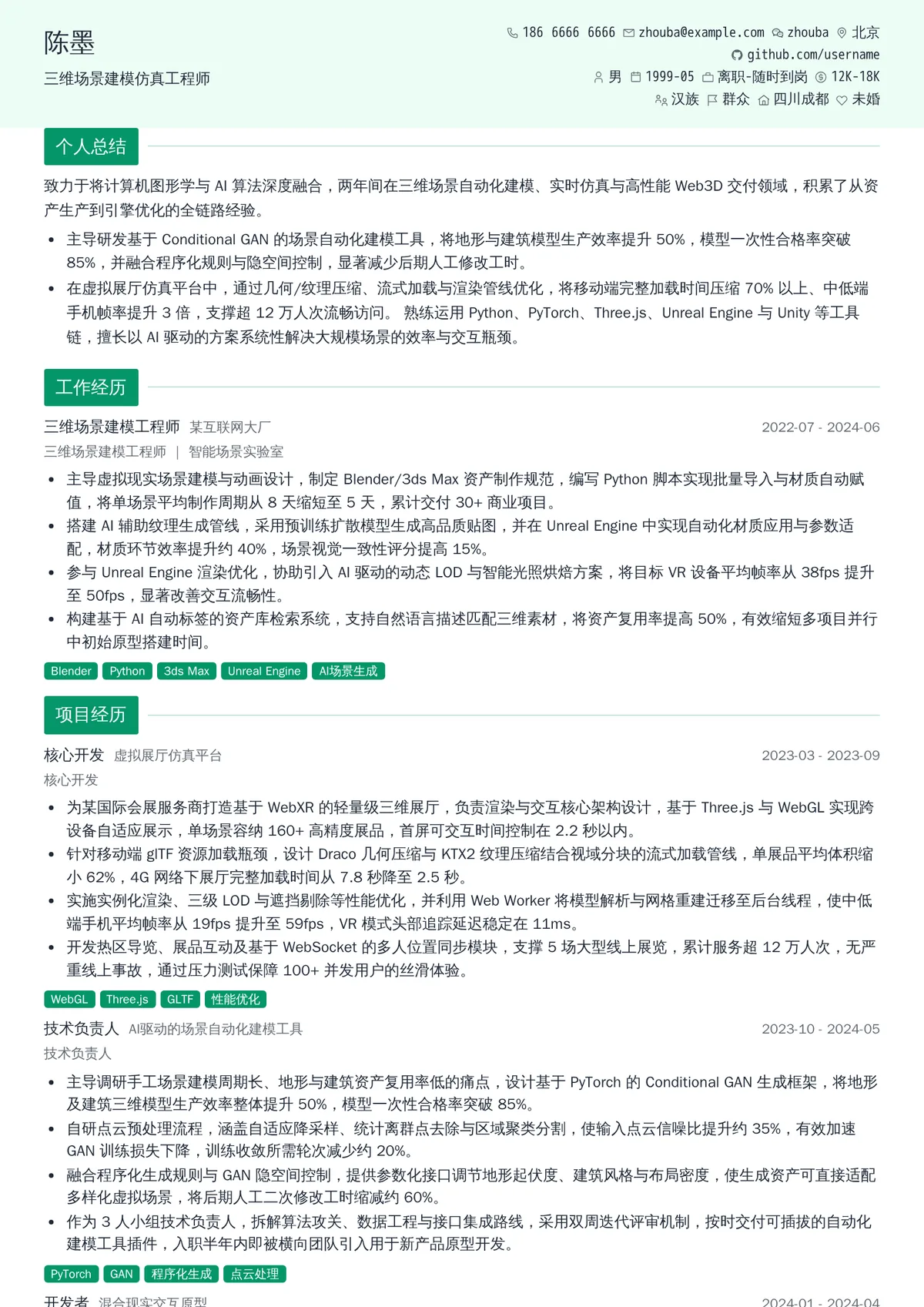
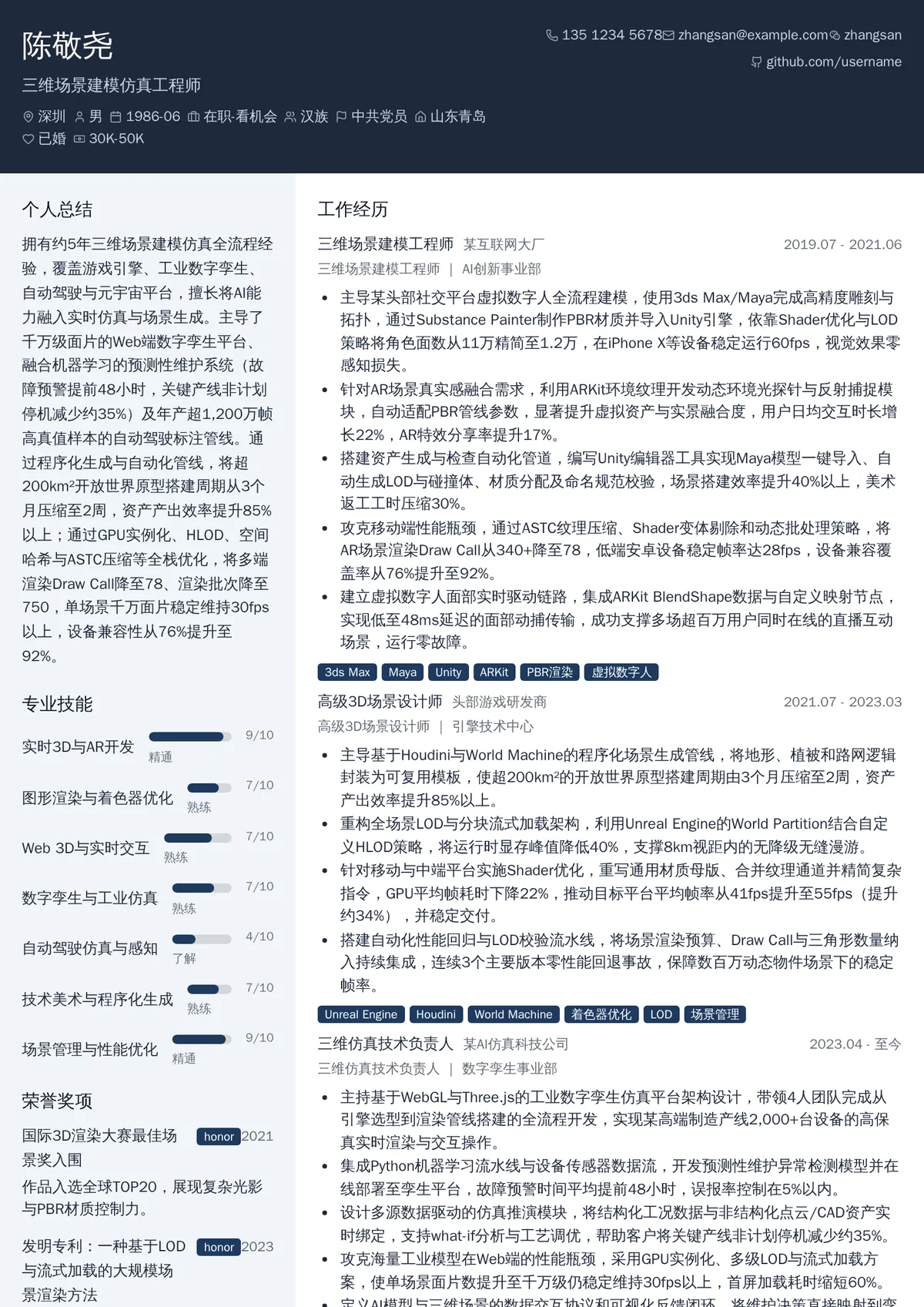
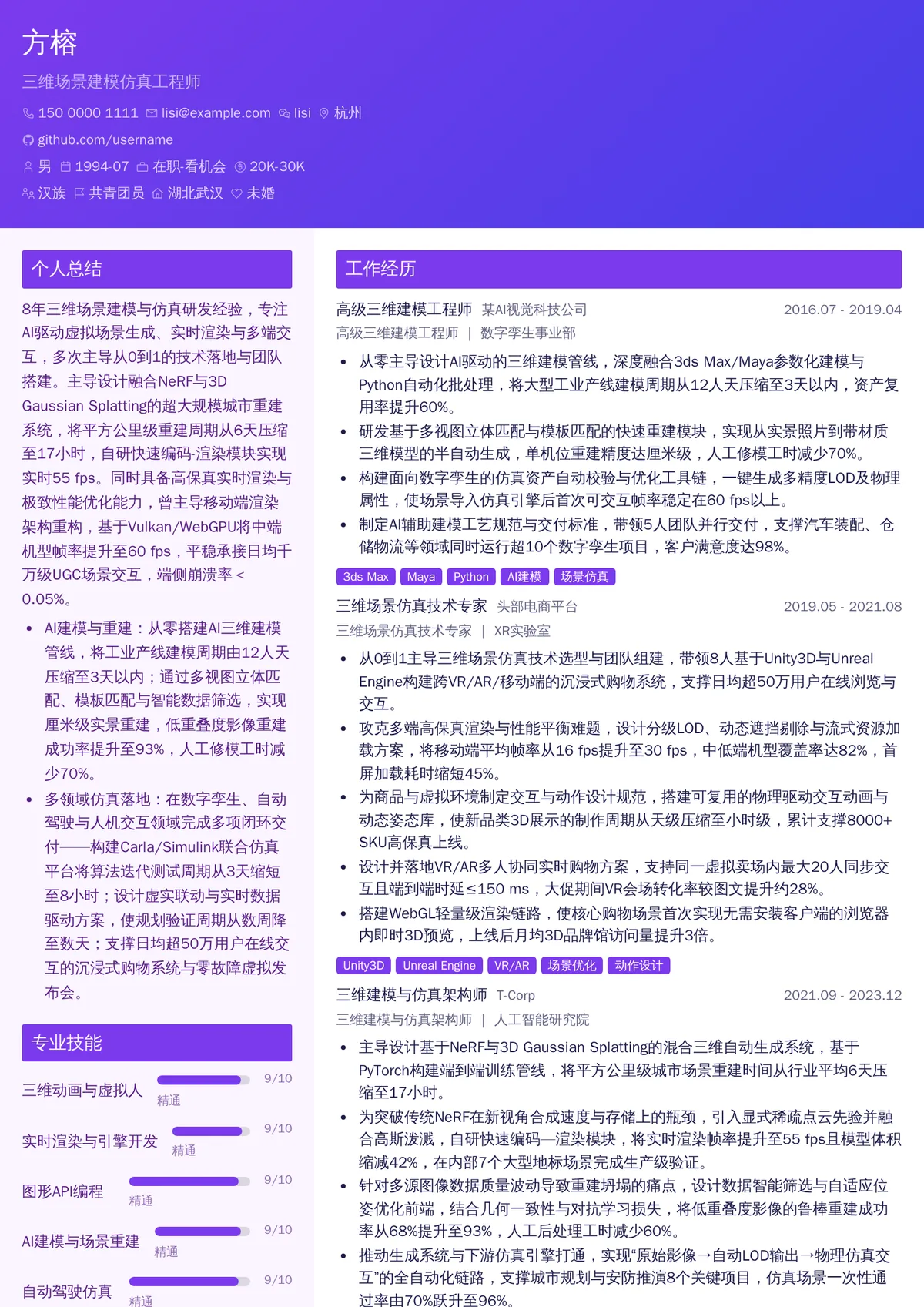
Resume examples for this role
Disclaimer: Salary figures on this page are estimated pre-tax monthly pay for positions with social-insurance contributions in China's tier-1 cities; other cities are converted using regional coefficients. Dimension scores and MBTI fit are editorial estimates, provided for reference only, and do not constitute any promise or advice.